Insights gathered in the year-long Lidar deployment marks a significant step forward in offshore windfarm development
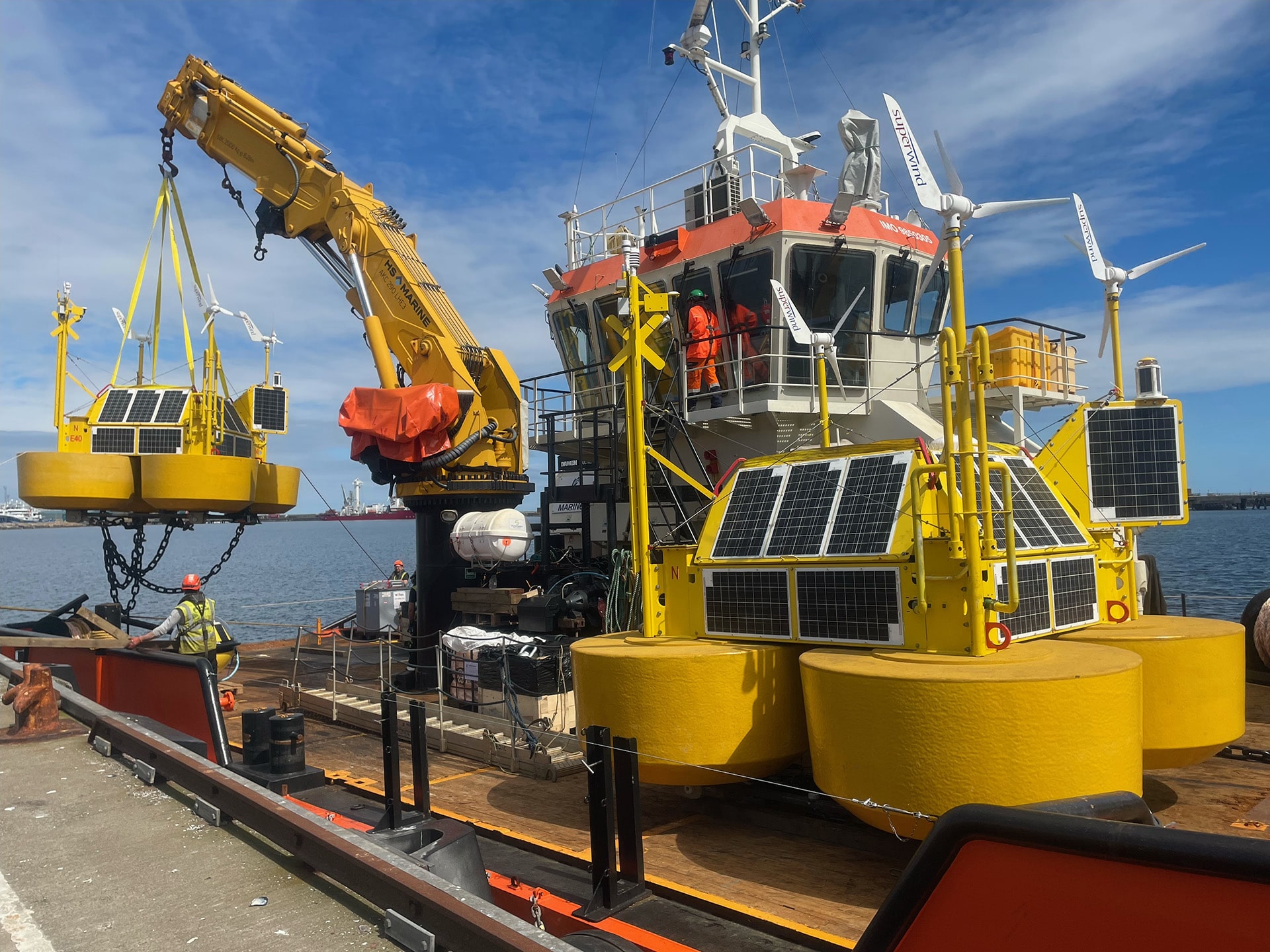
The Green Volt Offshore Windfarm has reached a pivotal milestone with the successful demobilisation of its floating Lidar (Light Detection and Ranging) system – a critical component in advancing the project towards construction.
Deployed in June 2024, the floating Lidar has spent over a year collecting high-resolution meteorological and oceanographic data from the project site in the central North Sea. This phase of data acquisition marks the completion of a vital element in the project’s early development and feeds directly into detailed engineering and design activities now underway.
Invaluable data for design and delivery
Throughout its deployment, the Lidar provided real-time measurements of wind speed, wave conditions and other key environmental factors. This dataset forms the backbone of a detailed metocean Front-End Engineering Design (FEED) study. The insights gained will improve the accuracy of site-specific wind yield predictions and underpin technical decisions on turbine layout, foundation design and logistics planning.
Enhancing key operational knowledge has also played a role in data gathering over the last 12 months. As part of this work, the project team evaluated vessel chartering options and assessed in detail the viability of different vessel sizes for servicing in poor weather, a crucial consideration for offshore operations as the project moves forward.
Overcoming offshore challenges
Planned maintenance was also carried out during the campaign, including battery replacements and data retrieval missions, ensuring consistent and reliable operation over the full deployment period.
Looking ahead
With the Lidar now demobilised and full datasets in hand, the project enters a new phase of analysis and refinement. The data will be used to validate metocean models, inform wind yield calculations and enable more accurate design and decision making in the consenting processes.
This milestone not only brings clarity to the physical and environmental characteristics of the Green Volt site, it also reinforces the project’s readiness to move forward at pace.
A collaborative success
Flotation Energy and Vårgrønn extend their thanks to project partners at Partrac, whose specialist Lidar technology and support were instrumental in delivering this phase of work.
The success of the deployment was also made possible through the strong support of local partners. Peterhead Port Authority played a key role in facilitating smooth mobilisation and demobilisation operations, whilst also providing vital infrastructure and local insight. The wider supply chain also contributed, with local accommodation providers, food services, and logistics partners all playing their part.
As one chapter closes, another begins. The successful conclusion of the Lidar campaign represents real progress for Green Volt – the world’s first commercial-scale floating windfarm.